There’s a misconception out there about about agencies and non-profits who are early in their data journey – that they don’t have enough of it.
But here’s my theory about child- and family-serving organizations and data: Even if they’re not sure what to do with it, they probably have a ton of it.
Often, my clients struggle to quantify and describe the difference they are making (i.e., how many kids they’ve served since they were founded or the aggregated effects of their programming).
I get it. They’re busy actually doing that important work!
However, this does NOT mean they don’t already have most of the information they need to answer those questions.
How do I know?
Well, when I ask them to share what they have so I can start analyzing it, I get inundated.
An avalanche of spreadsheet files or downloaded reports or logins to surveys they’ve launched after events or programs they’ve run.
It’s okay though. This is the first step of the process.
You have to figure out what you’ve got before you can even think about what else to collect or how to analyze it.
It’s kind of like when you clean out a closet and you just have to empty it before you can do anything else.
And, like when we clean out our closets, there is always more there than what we need.
It can be kind of overwhelming.
So we take inventory, figure out exactly what we do have, and then we can start to figure out what else we need.
Because even in our fullest, messiest closet, there’s always something we were looking for that we can’t find. But that’s step two.
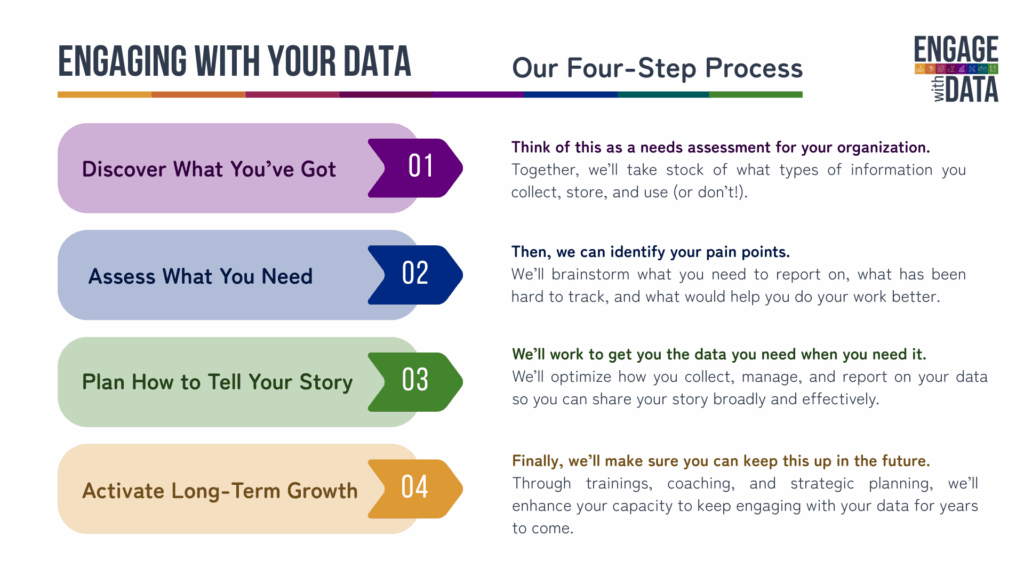
The rest of the steps in the Engage with Data process are in the graphic below.
Over the next four weeks, I’ll walk you through each one, so you too can use data to tell the story of your work!
What do you find most overwhelming about taking stock of your organization’s data?