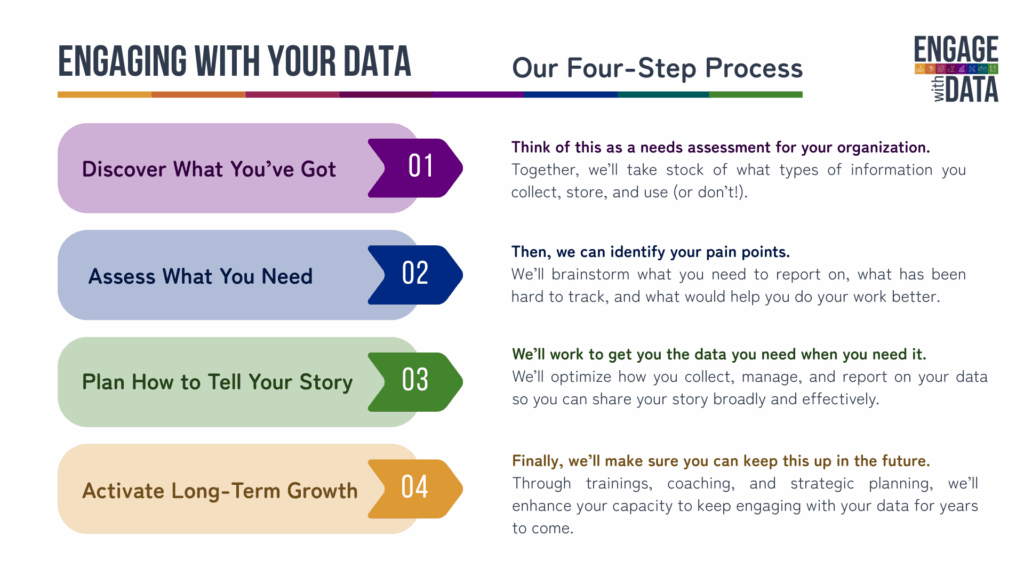
The next step in my process is to figure out why – if they have all that data – they’re still struggling to tell their story, meet reporting requirements, or prove how much they help families.
There’s so many reasons for this – not having capacity on the team (in terms of time or skillset) to manage the data, onerous reporting requirements from funders or clients, or even not understanding why using data regularly in your work is so important.
We dig into all the data a team might need, asking questions such as:
– What does your funder require you to track? (And here’s where we allow the grumping to commence.)
– What information do you need to know to actually offer your services?
– What do you wish you could demonstrate with your data? (Is it the number of clients you’ve served since you opened? Or which clients have achieved the short-term goals of your program? Or, even better, how many have had positive long-term outcomes?)
We also see if there is data you’re collecting that is really not useful or just sitting on a shelf … are you having your clients complete tons of brief surveys but never looking at them?
Once we have these answers and have vented enough to feel better, then we’re ready to take it to the next step: creating a system or process for your team to start collecting the right data to tell your story.
More about that next week.
If you work for a child- or family-serving organization and you’re trying to work through your data-related frustrations, I’d love to talk. Use the form below to send me an email about your PAIN POINTS, and I’ll send you a link to book an intro call.